
Home DogsAnal Glands in Dogs: The Signs, Treatment and Prevention of Anal Sac Disease in Dogs

Anal Glands in Dogs: The Signs, Treatment and Prevention of Anal Sac Disease in Dogs

by Vetic Editorial
Published: Updated: 5.8K views
Share

What are Anal Sacs? Where are the Anal Sacs in Dogs Located?

Anal sacs, commonly known as anal glands, are pouches located near the anus of a dog. Their walls are lined with sebaceous glands and they store a foul smelling fluid. 

Anal sacs in dogs have ducts that open inside the anus and these anal sacs are also known as anal glands. The anal sacs are present in male and female dogs.

What is the Function of Anal Sacs in Dogs?

What humans find gross can be beneficial for dogs! Anal gland secretion in dogs works as territory markers. The anal secretion passes with the bowel movement and it provides a distinctive smell to a dog’s faeces. 

Hope that explains why dogs are always busy sniffing poopies at the park!

Can Dogs Clean Their Anal Sacs Naturally? 

Yes! Most dogs should be able to clean their anal glands or sacs while they pass stools. So, if your dog is eating well and having proper solid stools, their anal sacs should be clean enough. 

The anal sac fluid is squeezed out by muscle contractions whenever the dog poops. 

What is Anal Sac Disease? 
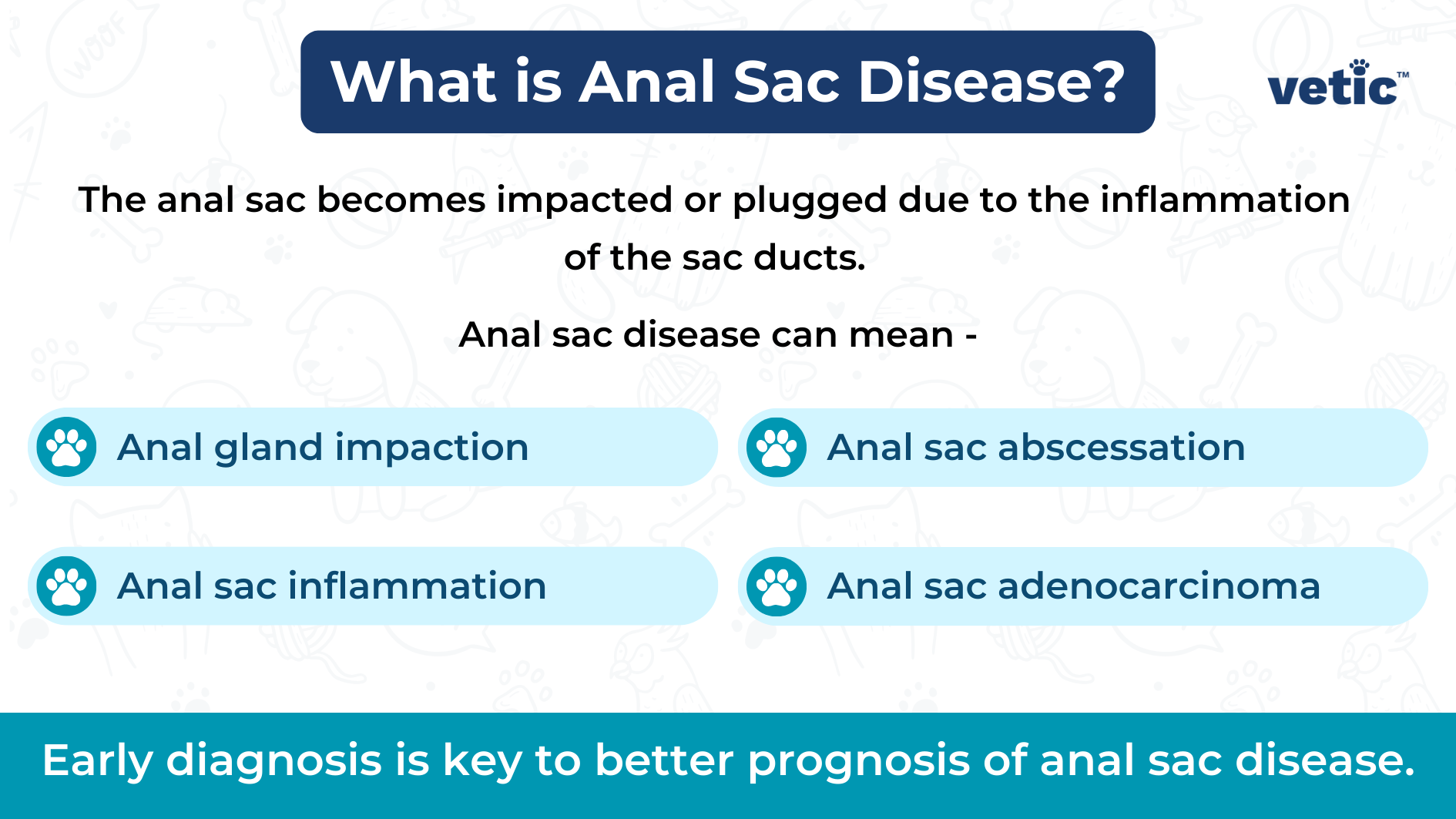
What is anal sac disease in dogs - The anal sac becomes impacted or plugged due to the inflammation of the sac ducts. Anal sac disease can mean - Anal gland impaction Anal sac inflammation Anal sac abscessation Anal sac adenocarcinoma Early diagnosis is key to better prognosis of anal sac disease.

Anal sac disease in dogs is actually very common. The sac becomes clogged/plugged due to the inflammation of the ducts. As the ducts narrow down and closed, the sac becomes full of the fluid which creates pressure and pain in the anal area. It may even make pooping painful for dogs. 

The anal sac fluid is quite ideal for bacterial growth and it allows the formation of abscesses. At the same time, bacteria that’s normally present in the poop can travel up the duct and cause serious infection. 

Once the anal sacs are infected, the fluid may become bloody and cause the formation of pus, leading to anal sac abscess. 

What are the Different Types of Anal Sac Disease?

Some of the common anal sac diseases in dogs are –

Impaction

Anal sac impaction is the most common anal sac disease in dogs. It happens when the anal sac ducts become “clogged” and the sacs do not empty properly. 

The anal sac becomes inflamed and continues to fill with the fluid. It causes severe pain and discomfort. 

Anal Sacculitis

Anal sac impaction can proceed to infection of the anal sac which is called anal sacculitis. 

Anal sacculitis can result in the formation of abscesses or even the rupture of the anal sac. The process can result in the release of pus and blood. 

Anal Sac Adenocarcinoma

It is the most serious anal sac disease. It is a type of cancer that is uncommon in dogs. 

Anal sac adenocarcinoma affects middle aged and older dogs. Cocker Spaniel, Cavalier king Charles Spaniel and Springer Spaniel are at higher risk of adenocarcinoma or cancer of the anal sacs. 

What are the Signs of Anal Sac Disease in Dogs?
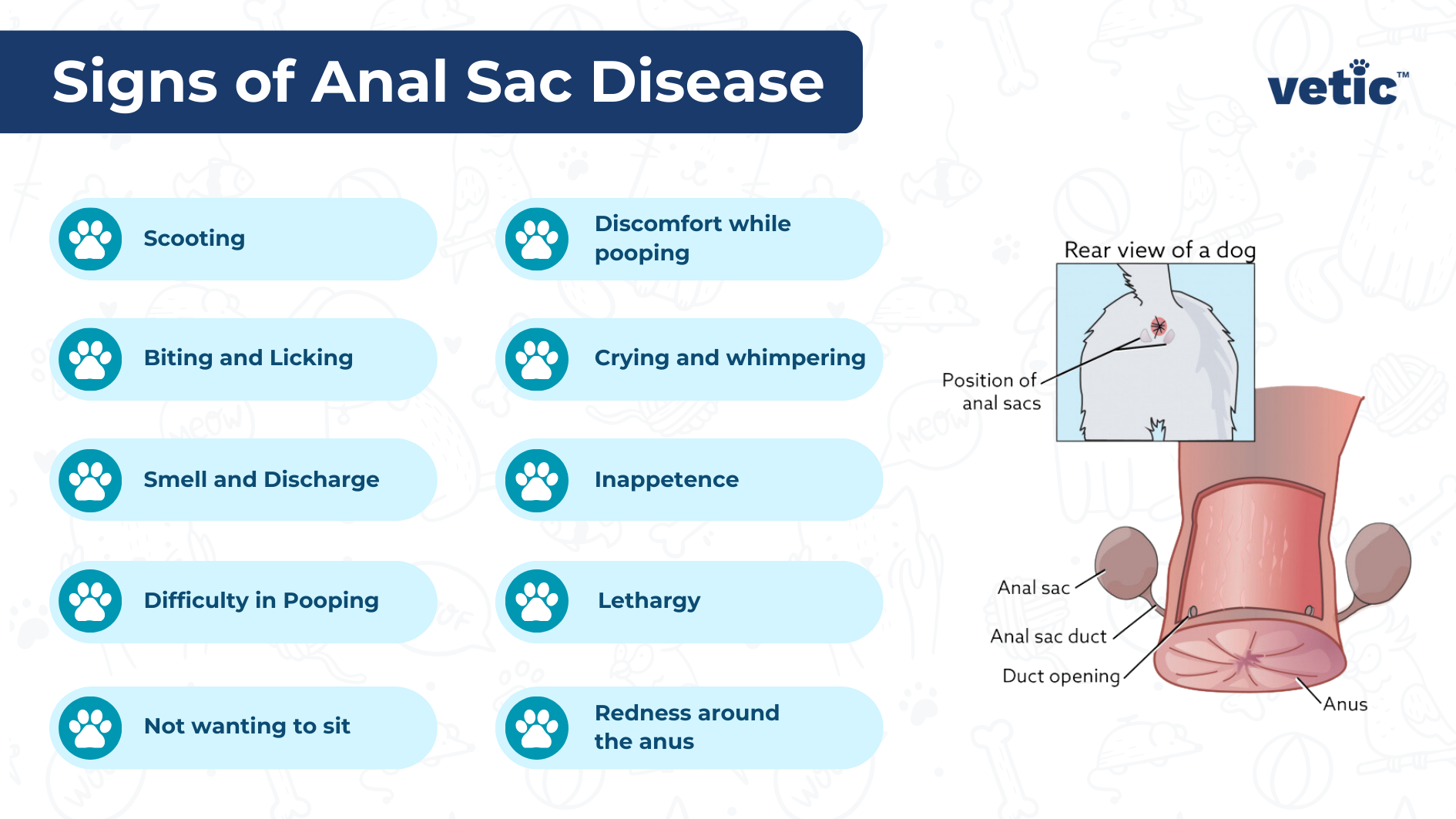
Signs of anal sac or anal gland disease in dogs - Scooting Biting and Licking Smell and Discharge Difficulty in Pooping Not wanting to sit Discomfort while pooping Crying and whimpering Inappetence Lethargy Redness around the anus

The common signs of anal sac disease in dogs include –

Scooting 

Scooting is when a dog drags their butt on the floor, ground, carpet or bed. 

Biting and Licking

Dogs will try to bite and lick the area right under their tail and around the anus, almost obsessively. 

Smell and Discharge

Pet parents may even notice a distinctly foul “fishy” smell. They may even notice traces of discharge wherever their dog scoots. 

Difficulty in Pooping

Due to the pain, dogs may strain to defecate or yelp during defecation. 

Other signs may include –

  • Not wanting to sit
  • Discomfort while pooping
  • Crying and whimpering 
  • Inappetence 
  • Lethargy 
  • Redness around the anus 

What’s the Treatment for Anal Sac Disease in Dogs?

If you catch your dog scooting, take them to the veterinarian.

The veterinarian will be able to express your dog’s anal sacs if they are not impacted already. If the anal sac contents have hardened, the vet can use medication to soften the anal sac fluid and clean the anal sacs. 

The exact treatment will depend upon the type of anal disease. 

In a few cases, where the doctor suspects bacterial or yeast infections, they might take a sample of the fluid for microscopy. 

In the case of anal sacculitis, the doctor is likely to prescribe oral antibiotics along with flushing the anal sacs with saline and antiseptic solutions. 

Your veterinarian may also recommend a biopsy if they suspect a tumour growth inside the anal sac. 

How to Prevent Anal Sac Disease in Dogs?
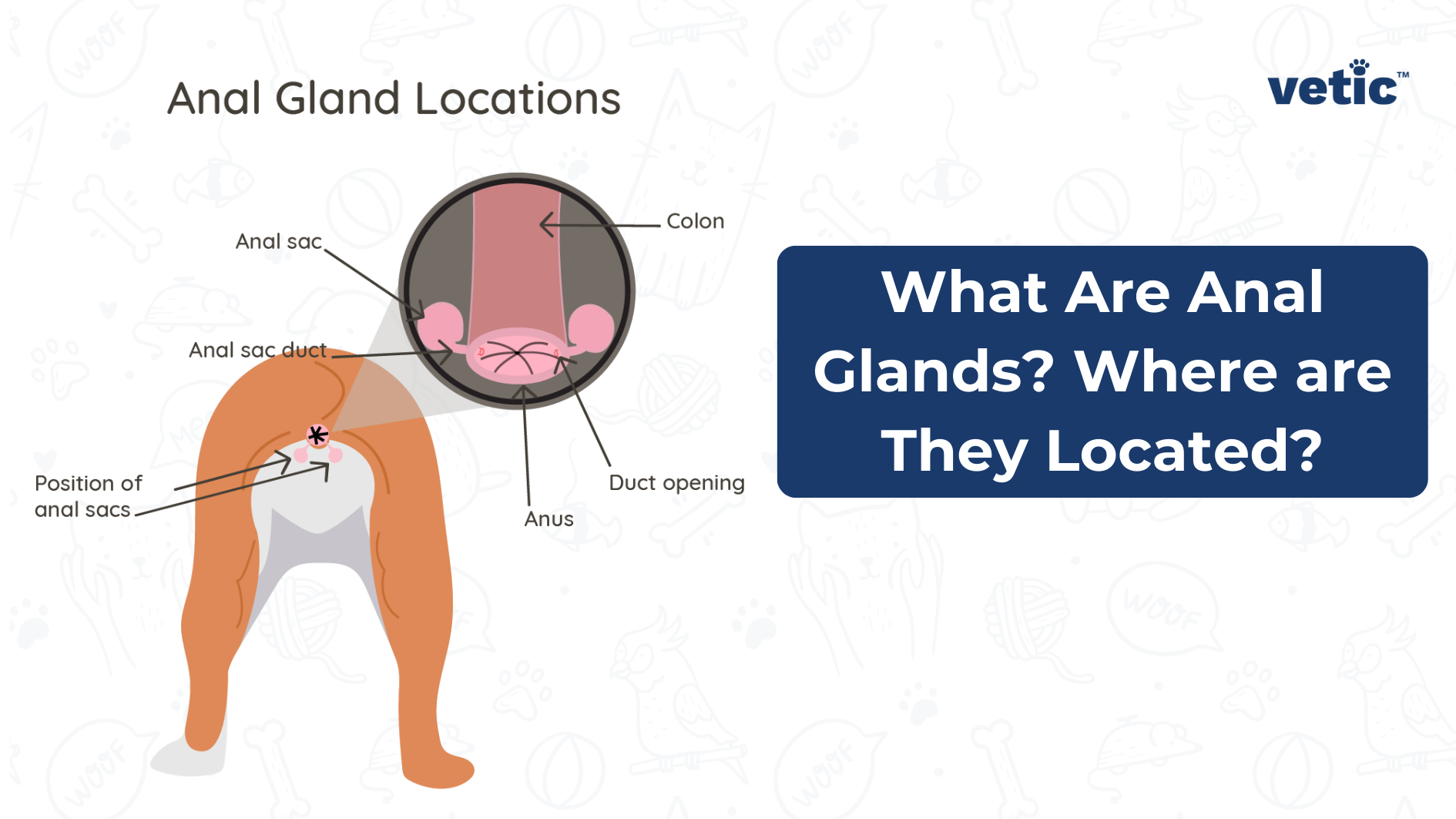
What are anal glands and where are anal sacs in dogs located? they are two glands located near the anus. they secrete a pungent smelling anal fluid

The prevention of anal sac disease in dogs begins with a proper nutritious diet that helps in solid stool formation. The anal sacs are supposed to be expressed as the dog poops. 

Maintain proper body weight and avoid unwanted weight gain in dogs of all breeds and ages. 

The other way to prevent anal sac disease is by taking them for grooming and veterinary check-ups daily, where the professionals can safely express your dog’s anal sacs. 

If your dog experiences repetitive inflammation and infection of the anal sacs, then your veterinarian may also recommend surgery to remove the anal glands. 

Tips to Keep Your Dog’s Anal Glands Healthy

  1. Give them proper food in ideal quantities appropriate for their age.
  2. Keep an eye on their poop. If it’s too soft, speak to your veterinarian. 
  3. Prevent them from becoming too overweight. 
  4. Take them to the veterinarian more frequently after they cross 5 years of age. 
  5. Ask for health supplements if your dog has anal sac health issues. 

Do not ignore the signs of anal sac disease. Early diagnosis can reduce the pain and discomfort, as well as the cost of treatment.

Want to know more about pets?

Popular Searches

Consultation for Dog Near Me | About Us | Grooming for Dog Near Me | Vaccination for Dog Near Me | Surgery for Dog Near Me | Emergency Care for Dog Near Me | Consultation for Cat Near Me | Grooming for Cat Near Me | Vaccination for Cat Near Me | Surgery for Cat Near Me | Emergency Care for Cat Near Me | Pet Clinic in Gurgaon | Pet Clinic in Delhi | Pet Clinic in Hyderabad | Pet Clinic in Mumbai | Pet Clinic in Chennai | Pet Clinic in Noida | Pet Clinic in Ghaziabad | Pet Clinic in Bangalore | Pet Clinic in Pune | Pet Clinic in Faridabad | Pet Clinic in Kolkata | Pet Consultation in Gurgaon | Pet Consultation in Bangalore | Pet Consultation in Chennai | Pet Consultation in Delhi | Pet Consultation in Hyderabad | Pet Consultation in Mumbai | Pet Consultation in Ghaziabad | Pet Consultation in Pune | Pet Consultation in Faridabad | Pet Consultation in Noida | Pet Consultation in Kolkata | Pet Grooming in Bangalore | Pet Diagnostics in Bangalore | Pet Surgery in Delhi | Pet Emergency Care in Mumbai | Pet Clinic in Golf Course Road, Gurgaon | Pet Clinic in Sector 45, Gurgaon | Pet Clinic in Sohna Road, Gurgaon | Pet Clinic in Galleria Market, Gurgaon | Pet Clinic in Sector 57, Gurgaon | Pet Clinic in Sector 82, Gurgaon | Pet Clinic in Greater Kailash, Delhi | Pet Clinic in Pitampura, Delhi | Pet Clinic in Sector 11, Delhi | Pet Clinic in Defence Colony, Delhi | Pet Clinic in Malviya Nagar, Delhi | Pet Clinic in Anand Vihar, Delhi | Pet Clinic in Vasant Kunj, Delhi | Pet Clinic in Hitec City, Hyderabad | Pet Clinic in Secunderabad, Hyderabad | Pet Clinic in Manikonda, Hyderabad | Pet Clinic in Banjara Hills, Hyderabad | Pet Clinic in Kukatpally, Hyderabad | Pet Clinic in Kandivali, Mumbai | Pet Clinic in Thane West, Mumbai | Pet Clinic in Andheri West, Mumbai | Pet Clinic in Chembur, Mumbai | Pet Clinic in Sanpada, Mumbai | Pet Clinic in Mira Road, Mumbai | Pet Clinic in Borivali, Mumbai | Pet Clinic in Powai, Mumbai | Pet Clinic in Banerghatta, Bangalore | Pet Clinic in HSR Layout, Bangalore | Pet Clinic in Domlur, Bangalore | Pet Clinic in Kalyan Nagar, Bangalore | Pet Clinic in Whitefield, Bangalore | Pet Clinic in Sadashiva Nagar, Bangalore | Pet Clinic in Nagarbhavi, Bangalore | Pet Clinic in Electronic City, Bangalore | Pet Clinic in Banashankari, Bangalore | Pet Clinic in Yelahanka, Bangalore | Pet Clinic in Sarjapur Road, Bangalore | Pet Clinic in Koramangala, Bangalore | Pet Clinic in Aundh, Pune | Pet Clinic in Kalyani Nagar, Pune | Pet Clinic in NIBM, Pune | Pet Clinic in Wakad, Pune | Pet Clinic in Sector 20, Noida | Pet Clinic in Sector 49, Noida | Pet Clinic in Indirapuram, Ghaziabad | Pet Clinic in Sector 14, Faridabad | Pet Clinic in Salt Lake, Kolkata | Pet Clinic in Anna Nagar, Chennai | Veterinary Hospital Near Me | Pet Clinic Near Me | Vet Near Me | Pet Grooming Clinic Near Me | Pet Cancer Treatment Near Me | Pet Grooming in Chennai | Pet Grooming in Delhi | Pet Grooming in Gurgaon | Pet Grooming in Hyderabad | Pet Grooming in Mumbai | Pet Grooming in Ghaziabad | Pet Grooming in Pune | Pet Grooming in Faridabad | Pet Grooming in Noida | Pet Grooming in Kolkata | Pet Diagnostics in Chennai | Pet Diagnostics in Delhi | Pet Diagnostics in Gurgaon | Pet Diagnostics in Hyderabad | Pet Diagnostics in Mumbai | Pet Diagnostics in Ghaziabad | Pet Diagnostics in Pune | Pet Diagnostics in Faridabad | Pet Diagnostics in Noida | Pet Diagnostics in Kolkata | Pet Surgery in Bangalore | Pet Surgery in Chennai | Pet Surgery in Gurgaon | Pet Surgery in Hyderabad | Pet Surgery in Mumbai | Pet Surgery in Ghaziabad | Pet Surgery in Pune | Pet Surgery in Faridabad | Pet Surgery in Noida | Pet Surgery in Kolkata | Pet Emergency Care in Bangalore | Pet Emergency Care in Chennai | Pet Emergency Care in Gurgaon | Pet Emergency Care in Hyderabad | Pet Emergency Care in Ghaziabad | Pet Emergency Care in Pune | Pet Emergency Care in Faridabad | Pet Emergency Care in Noida | Pet Emergency Care in Kolkata
What is anal sac disease in dogs - The anal sac becomes impacted or plugged due to the inflammation of the sac ducts. Anal sac disease can mean - Anal gland impaction Anal sac inflammation Anal sac abscessation Anal sac adenocarcinoma Early diagnosis is key to better prognosis of anal sac disease.

    Consult A Vet

    Book An Appointment


    image
    Call A Vet
    ×

      Consult A Vet

      Book An Appointment