
Home DogsCIRDC: Infectious Respiratory Diseases or Kennel Cough in Dogs

CIRDC: Infectious Respiratory Diseases or Kennel Cough in Dogs

by Vetic Editorial
Published: Updated: 3.6K views
Share

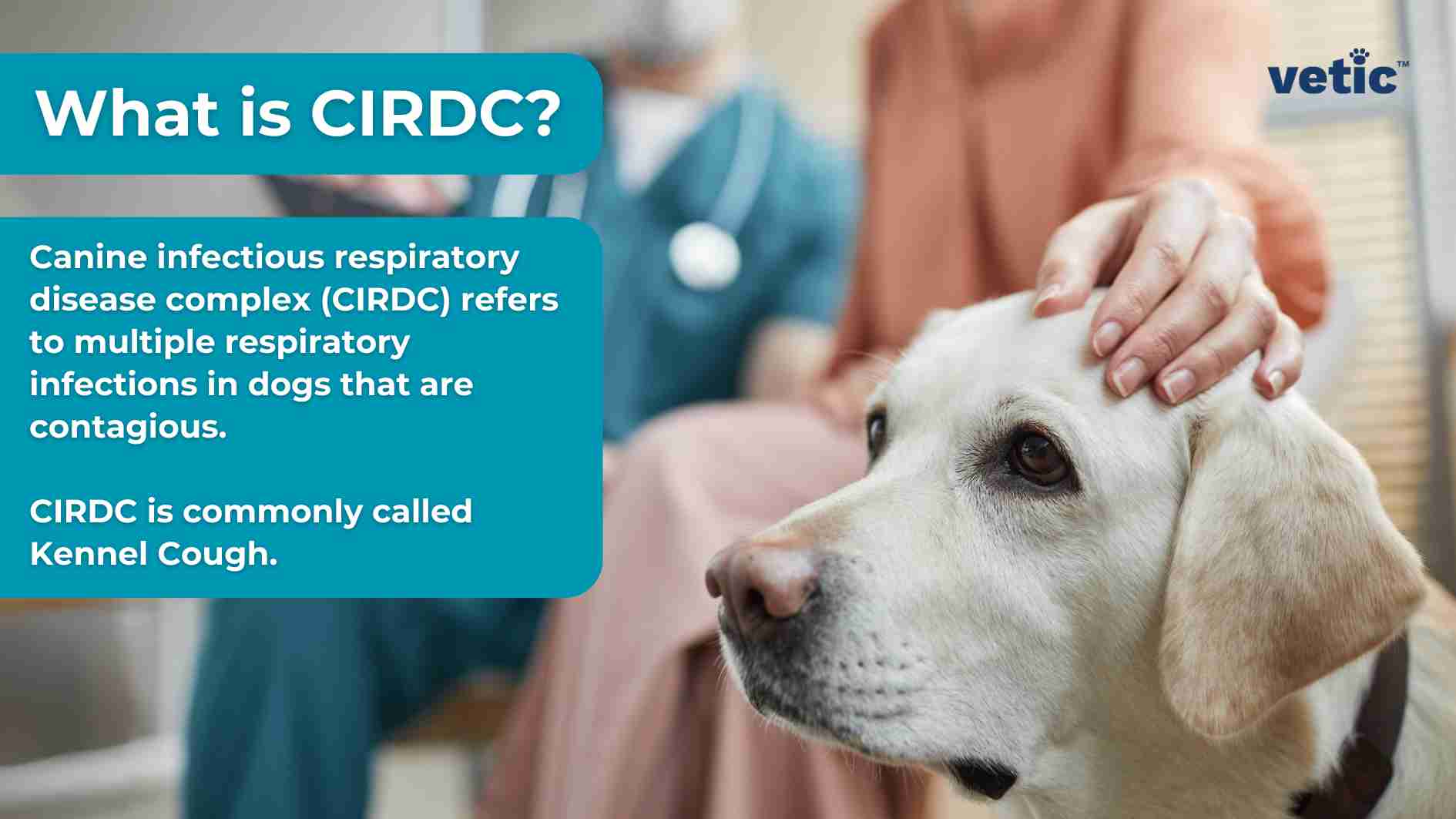
 Canine infectious respiratory disease complex (CIRDC) refers to multiple respiratory infections in dogs that are contagious. CIRDC is commonly called Kennel Cough, but it can be caused by multiple infectious agents. 

Why is CIRDC commonly called Kennel Cough?

CIRDC is common when multiple dogs live in a confined environment. Kennel cough gets its name from the rapid onset and spread of the signs of CIRDC inside kennels, shelters, dog boarding and multi-dog households. 

What Pathogens cause Kennel Cough or CIRDC?
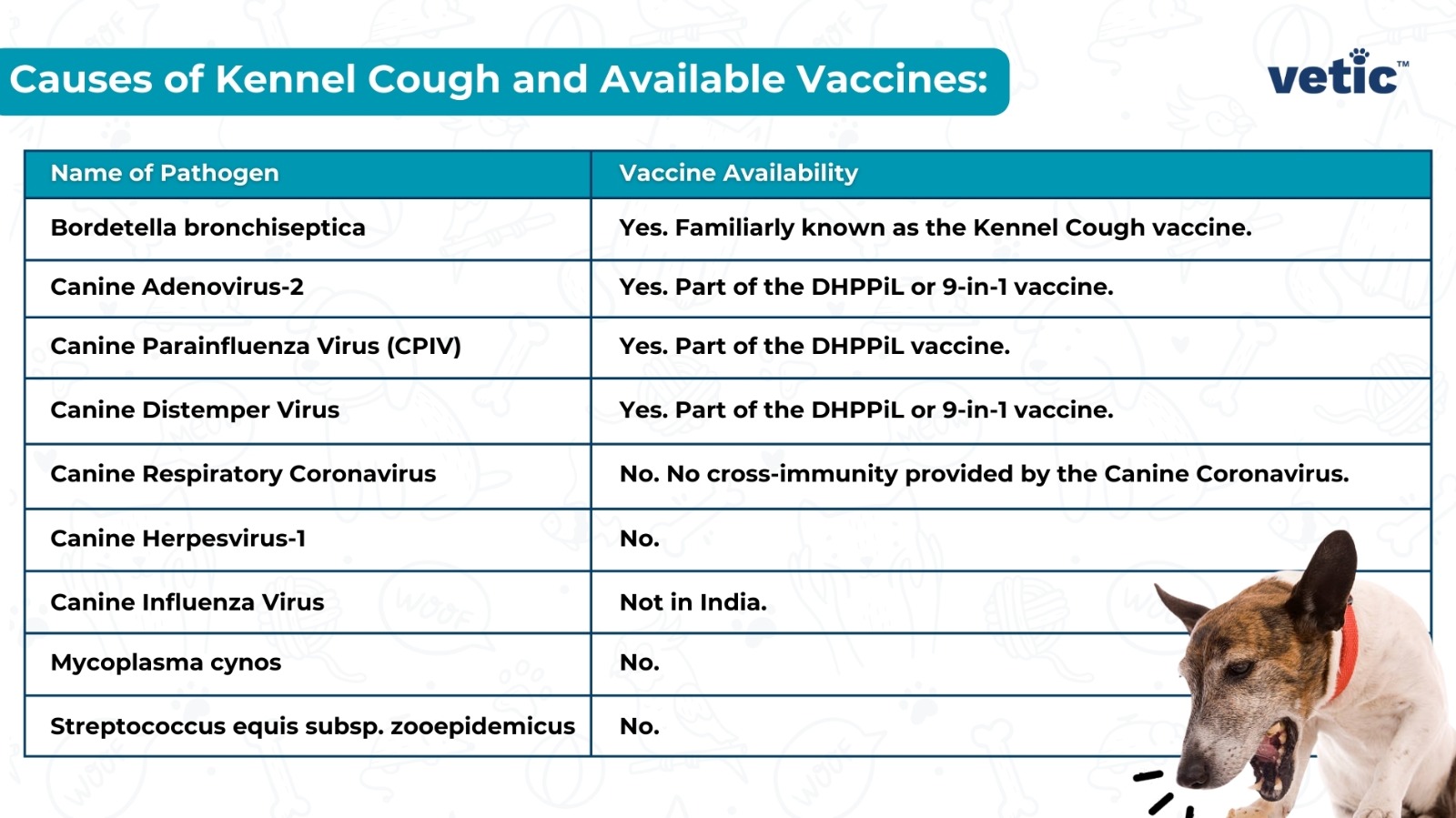
The image presents an educational chart titled “Causes of Kennel Cough and Available Vaccines.” It lists eight pathogens in the “Name of Pathogen” column and their corresponding vaccine availability status in the “Vaccine Availability” column. The chart includes common pathogens like Bordetella bronchiseptica, Canine Adenovirus-2, and Canine Parainfluenza Virus, among others. Notably, vaccines are not available for Canine Respiratory Coronavirus, Canine Herpesvirus-1, and Mycoplasma cynos. The ‘vetic’ logo is visible in the top right corner. A dog with a red collar is depicted at the bottom right, adding a visual element to the informative content.

Extensive research has shown that CIRDC is most frequently caused by Bordetella bronchiseptica

The other common pathogens that have caused CIRDC include canine adenovirus type-2 (CAV-2), canine respiratory coronavirus and canine parainfluenza virus (CPIV).

In the last three decades, other pathogens have been identified as the causal agents of CIRDC including canine herpesvirus-1, canine influenza virus, canine distemper virus (CDV), Mycoplasma, Streptococcus equis subsp. zooepidemicus

A dog can be infected with two or more of these viruses and bacteria that cause CIRDC. 

How does CIRDC (Kennel Cough) spread?

The pathogens associated with CIRDC can spread through coughing, and sneezing. Some also spread through contact with saliva and other bodily fluids.

It can also spread through indirect contact via used bedding, clothes, bowls and toys. 

Humans can help in spreading CIRDC (especially of viral origin) by petting an infected dog and then petting another healthy dog or puppy. 

What are the signs of CIRDC?
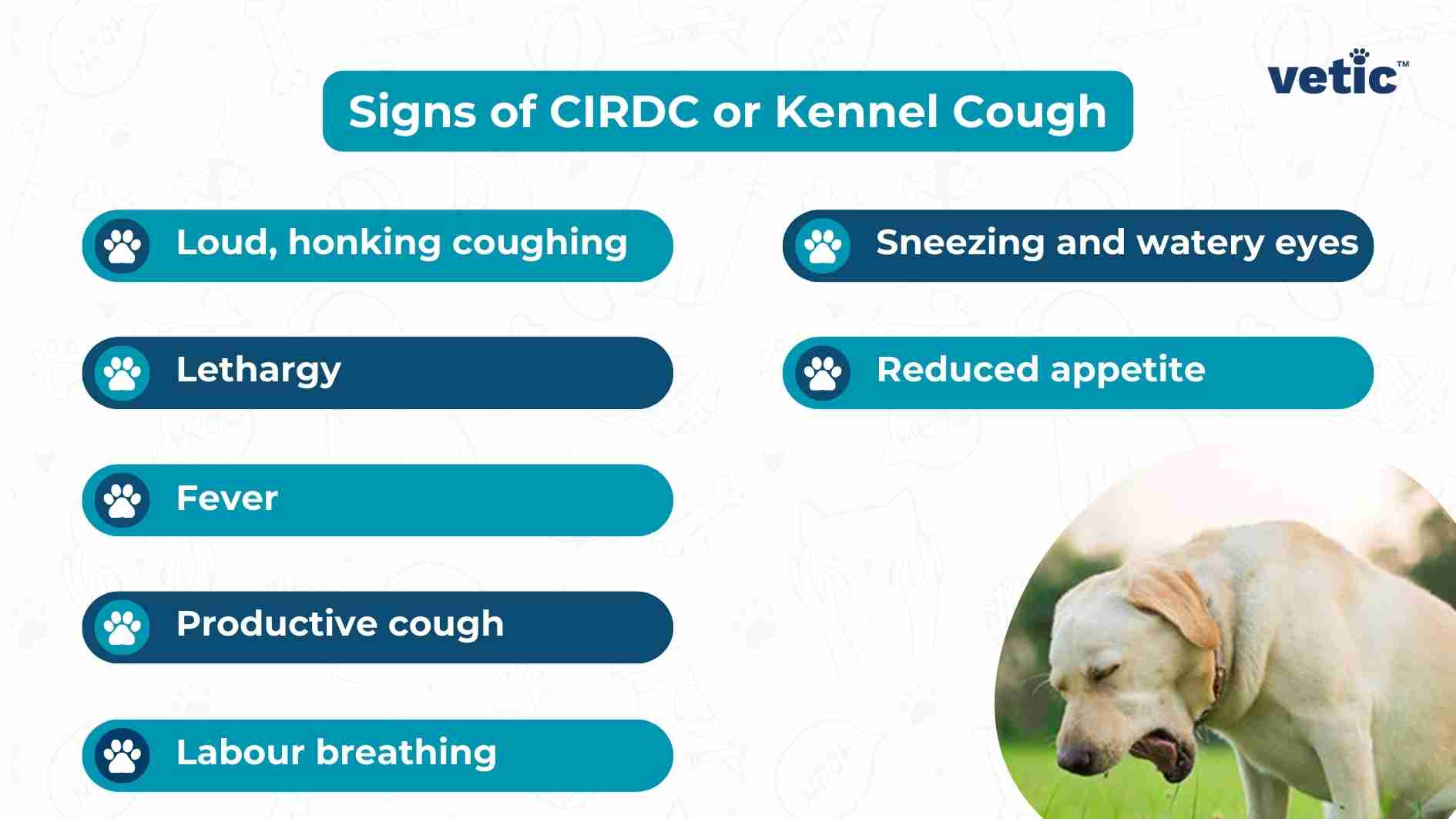
An informational graphic listing the signs of CIRDC or Kennel Cough in dogs, with a picture of a dog on the right side. Description: The image is an educational graphic about the signs of CIRDC (Canine Infectious Respiratory Disease Complex), also known as Kennel Cough. It features a list of eight symptoms, each accompanied by a paw print icon: Loud, honking cough Lethargy Fever Productive cough Labored breathing Sneezing and watery eyes Reduced appetite The title “Signs of CIRDC or Kennel Cough” is displayed prominently at the top, with the ‘vetic’ logo in the top right corner. A light-colored dog appears on the right side of the graphic, seemingly sneezing or coughing.

The main telltale sign of CIRDC is a non-stop, loud, honking cough

The cough can cause gagging, retching and produce froth that looks like vomit. The cough typically becomes worse with exercise. 

Some dogs may end up vomiting or producing phlegm after a serious bout of coughing. 

However, you must remember that not all dogs have coughs. Some dogs only have a runny nose and watery eyes. Some may end up sneezing a lot!

While most dogs can recover within a week or 10 days, some dogs may develop more serious signs of CIRD –

  • Lethargy
  • Reduced appetite
  • Fever 
  • Labour breathing
  • Productive cough

These are common signs of more severe infections such as canine distemper virus (CDV), canine parainfluenza virus, canine respiratory coronavirus and canine influenza virus. 

Dogs with CDV typically have multiple system involvement. They can show other signs such as gastroenteritis (diarrhoea, bloody diarrhoea, vomiting) and neurological signs (head tilt, twitching and grand mal seizures). CDV doesn’t have any cure. Infected pups and dogs typically have a lifetime of neurological complications. The mortality rate of pups from CDV is as high as 95%. 

How is CIRDC or Kennel Cough Diagnosed?

CIRDC or Kennel Cough requires multiple tests and physical check-ups. 

For mild cases of CIRDC, your veterinarian will make a presumptive CIRDC diagnosis and treat your dog symptomatically in addition to prescribing broad-spectrum antibiotics. 

If your dog’s coughing, sneezing and sniffling doesn’t reduce, your veterinarian may recommend further diagnostic tests. 

While the veterinarian might be able to tell whether a dog has signs of bronchial congestion or pneumonia, it’s impossible for anyone to determine the cause (microorganism) of CIRDC. 

Your veterinarian will require your dog’s vaccination records and health records. 

Next, your vet will recommend diagnostic tests including chest X-rays, complete blood count (CBC), canine distemper virus (CDV) test, if your dog has chronic and severe coughing and congestion. 

What’s the Treatment for CIRDC or Kennel Cough?
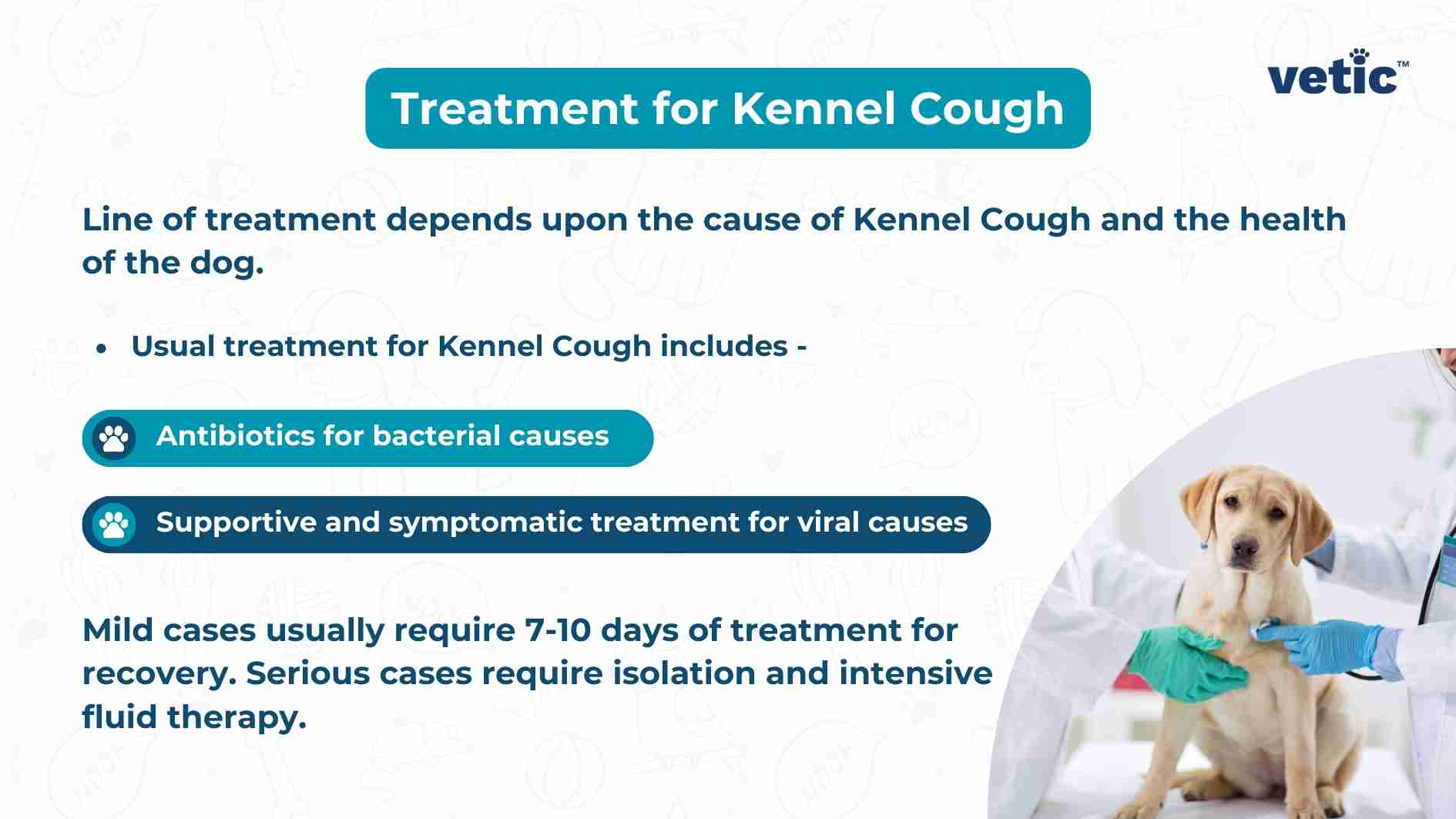
The image is an informational graphic on a light blue background with a watermark of dog icons. It’s titled “Treatment for Kennel Cough” in bold letters at the top. There is a logo “vetiC™” at the top right corner. The main content explains that the line of treatment depends upon the cause of Kennel Cough and health of the dog. Two specific treatments are listed: antibiotics for bacterial causes, marked with a blue icon; supportive and symptomatic treatment for viral causes, marked with a green icon. Additional information states that mild cases usually require 7-10 days of treatment for recovery while serious cases need isolation and intensive fluid therapy. On the right side, there is an image of a Labrador Retriever puppy being examined by veterinarians for cough and congestion using a stethoscope on the pup's chest

The treatment for kennel cough depends on the cause. 

If the cause is viral, some cases may demand the use of serum antigens and immunity boosters. Highly contagious viral diseases such as distemper do not have any specific cure or protocol for treatment. Vets can only treat dogs based on the symptoms they show. 

If the cause is bacterial, your dog may benefit from the right type and dose of antibiotics prescribed by the veterinarian. 

You should never choose the antibiotic or adjust the dose on your own. Always speak with the veterinarian for the right treatment for CIRDC. 

If your dog has been sick for longer than a week, you absolutely need to visit a veterinarian. Dogs suffering from CIRDC for long periods have higher chances of developing bacterial pneumonia. 

Can You Prevent CIRDC or Kennel Cough?

No matter how much we love our dogs, it’s not always possible for us to protect them completely. Nonetheless, we can only try! 

  • Keep your dog’s vaccines updated at all times. 
  • If you see another dog with signs of kennel cough, keep your dog away. 
  • Double-check with your boarding/kennel about coughing or sneezing outbreaks before dropping your dog off. 
  • Don’t let your dog drink or eat from bowls shared by other dogs. 
  • Don’t let your dog play with toys of other dogs. 

NOTE: Core vaccines DHPPiL and Kennel Cough vaccines protect against CDV, Canine Parainfluenza virus (CPIV), Bordetella spp, and Canine Adenovirus-2. However, Canine Influenza vaccine isn’t available in India and vaccines against Canine Herpesvirus-1, Canine Respiratory Coronavirus, and Mycoplasma cynos aren’t available at all. You need to maintain proper hygiene and stay vigilant for any sign of CIRDC that your dog may exhibit.

Here are the most frequently asked questions on CIRDC or Kennel Cough:

Why is CIRDC commonly called Kennel Cough?

CIRDC spreads rapidly in confined environments like kennels, hence the name “Kennel Cough.”

What pathogens cause Kennel Cough or CIRDC?

CIRDC is mainly caused by Bordetella bronchiseptica, along with other viruses like CAV-2, CPIV, and Mycoplasma.

How does CIRDC (Kennel Cough) spread?

CIRDC spreads through coughing, sneezing, and contact with infected saliva, bodily fluids, bedding, bowls, and toys.

What are the signs of CIRDC?

The main sign is a loud, honking cough, often accompanied by gagging, retching, and phlegm production.

How is CIRDC or Kennel Cough diagnosed?

Diagnosis involves physical exams, vaccination records, chest X-rays, CBCs, and tests for specific viruses like CDV.

What’s the treatment for CIRDC or Kennel Cough?

Treatment depends on the cause, including antibiotics for bacterial infections and symptomatic care for viral cases.

Can you prevent CIRDC or Kennel Cough?

Prevent CIRDC by keeping vaccines updated, avoiding sick dogs, and maintaining hygiene in shared spaces.

What is the prognosis for dogs with CIRDC?

Most dogs recover within 10 days, but severe cases can lead to complications like pneumonia, requiring veterinary care.

Want to know more about pets?

Popular Searches

Consultation for Dog Near Me | About Us | Grooming for Dog Near Me | Vaccination for Dog Near Me | Surgery for Dog Near Me | Emergency Care for Dog Near Me | Consultation for Cat Near Me | Grooming for Cat Near Me | Vaccination for Cat Near Me | Surgery for Cat Near Me | Emergency Care for Cat Near Me | Pet Clinic in Gurgaon | Pet Clinic in Delhi | Pet Clinic in Hyderabad | Pet Clinic in Mumbai | Pet Clinic in Chennai | Pet Clinic in Noida | Pet Clinic in Ghaziabad | Pet Clinic in Bangalore | Pet Clinic in Pune | Pet Clinic in Faridabad | Pet Clinic in Kolkata | Pet Consultation in Gurgaon | Pet Consultation in Bangalore | Pet Consultation in Chennai | Pet Consultation in Delhi | Pet Consultation in Hyderabad | Pet Consultation in Mumbai | Pet Consultation in Ghaziabad | Pet Consultation in Pune | Pet Consultation in Faridabad | Pet Consultation in Noida | Pet Consultation in Kolkata | Pet Grooming in Bangalore | Pet Diagnostics in Bangalore | Pet Surgery in Delhi | Pet Emergency Care in Mumbai | Pet Clinic in Golf Course Road, Gurgaon | Pet Clinic in Sector 45, Gurgaon | Pet Clinic in Sohna Road, Gurgaon | Pet Clinic in Galleria Market, Gurgaon | Pet Clinic in Sector 57, Gurgaon | Pet Clinic in Sector 82, Gurgaon | Pet Clinic in Greater Kailash, Delhi | Pet Clinic in Pitampura, Delhi | Pet Clinic in Sector 11, Delhi | Pet Clinic in Defence Colony, Delhi | Pet Clinic in Malviya Nagar, Delhi | Pet Clinic in Anand Vihar, Delhi | Pet Clinic in Vasant Kunj, Delhi | Pet Clinic in Hitec City, Hyderabad | Pet Clinic in Secunderabad, Hyderabad | Pet Clinic in Manikonda, Hyderabad | Pet Clinic in Banjara Hills, Hyderabad | Pet Clinic in Kukatpally, Hyderabad | Pet Clinic in Kandivali, Mumbai | Pet Clinic in Thane West, Mumbai | Pet Clinic in Andheri West, Mumbai | Pet Clinic in Chembur, Mumbai | Pet Clinic in Sanpada, Mumbai | Pet Clinic in Mira Road, Mumbai | Pet Clinic in Borivali, Mumbai | Pet Clinic in Powai, Mumbai | Pet Clinic in Banerghatta, Bangalore | Pet Clinic in HSR Layout, Bangalore | Pet Clinic in Domlur, Bangalore | Pet Clinic in Kalyan Nagar, Bangalore | Pet Clinic in Whitefield, Bangalore | Pet Clinic in Sadashiva Nagar, Bangalore | Pet Clinic in Nagarbhavi, Bangalore | Pet Clinic in Electronic City, Bangalore | Pet Clinic in Banashankari, Bangalore | Pet Clinic in Yelahanka, Bangalore | Pet Clinic in Sarjapur Road, Bangalore | Pet Clinic in Koramangala, Bangalore | Pet Clinic in Aundh, Pune | Pet Clinic in Kalyani Nagar, Pune | Pet Clinic in NIBM, Pune | Pet Clinic in Wakad, Pune | Pet Clinic in Sector 20, Noida | Pet Clinic in Sector 49, Noida | Pet Clinic in Indirapuram, Ghaziabad | Pet Clinic in Sector 14, Faridabad | Pet Clinic in Salt Lake, Kolkata | Pet Clinic in Anna Nagar, Chennai | Veterinary Hospital Near Me | Pet Clinic Near Me | Vet Near Me | Pet Grooming Clinic Near Me | Pet Cancer Treatment Near Me | Pet Grooming in Chennai | Pet Grooming in Delhi | Pet Grooming in Gurgaon | Pet Grooming in Hyderabad | Pet Grooming in Mumbai | Pet Grooming in Ghaziabad | Pet Grooming in Pune | Pet Grooming in Faridabad | Pet Grooming in Noida | Pet Grooming in Kolkata | Pet Diagnostics in Chennai | Pet Diagnostics in Delhi | Pet Diagnostics in Gurgaon | Pet Diagnostics in Hyderabad | Pet Diagnostics in Mumbai | Pet Diagnostics in Ghaziabad | Pet Diagnostics in Pune | Pet Diagnostics in Faridabad | Pet Diagnostics in Noida | Pet Diagnostics in Kolkata | Pet Surgery in Bangalore | Pet Surgery in Chennai | Pet Surgery in Gurgaon | Pet Surgery in Hyderabad | Pet Surgery in Mumbai | Pet Surgery in Ghaziabad | Pet Surgery in Pune | Pet Surgery in Faridabad | Pet Surgery in Noida | Pet Surgery in Kolkata | Pet Emergency Care in Bangalore | Pet Emergency Care in Chennai | Pet Emergency Care in Gurgaon | Pet Emergency Care in Hyderabad | Pet Emergency Care in Ghaziabad | Pet Emergency Care in Pune | Pet Emergency Care in Faridabad | Pet Emergency Care in Noida | Pet Emergency Care in Kolkata
An informational image explaining CIRDC (Canine Infectious Respiratory Disease Complex), featuring a close-up of a dog being petted by a person, with text and the Vetic logo visible. The image is designed to inform about CIRDC (Canine Infectious Respiratory Disease Complex), commonly known as Kennel Cough. It features a white dog with brown eyes, wearing a brown collar, looking to the side. A person’s hand, clad in an orange shirt, is seen petting the dog’s head. In the background, there’s a hint of another person in medical attire and a surgical mask, though their identity is not clear. The headline “What is CIRDC?” is prominently displayed in white letters against a dark blue backdrop. Below the headline, there’s a detailed explanation in white text on a teal background, stating: “Canine infectious respiratory disease complex (CIRDC) refers to multiple respiratory infections in dogs that are contagious. CIRDC is commonly called Kennel Cough.”

    Consult A Vet

    Book An Appointment


    image
    Call A Vet
    ×

      Consult A Vet

      Book An Appointment