Home CatsPancreatitis in Cats: Signs, Cause, Diagnosis, Treatment and Outcome

Pancreatitis in Cats: Signs, Cause, Diagnosis, Treatment and Outcome

by Vetic Editorial
Published: Updated: 9K views
Share

What is Pancreatitis in Cats?

The pancreas is a crucial organ that has two main functions. On one hand, the pancreas produces enzymes that help in digestion and, on the other, it also produces insulin that controls blood glucose

The inflammation of the pancreas is called pancreatitis. When it happens in cats, it’s called pancreatitis in cats. 

Did you know? inflammation of the pancreas can also cause the inflammation of the liver and surrounding intestine. Since it involves multiple organs, it is often called triaditis

What is Chronic Pancreatitis?

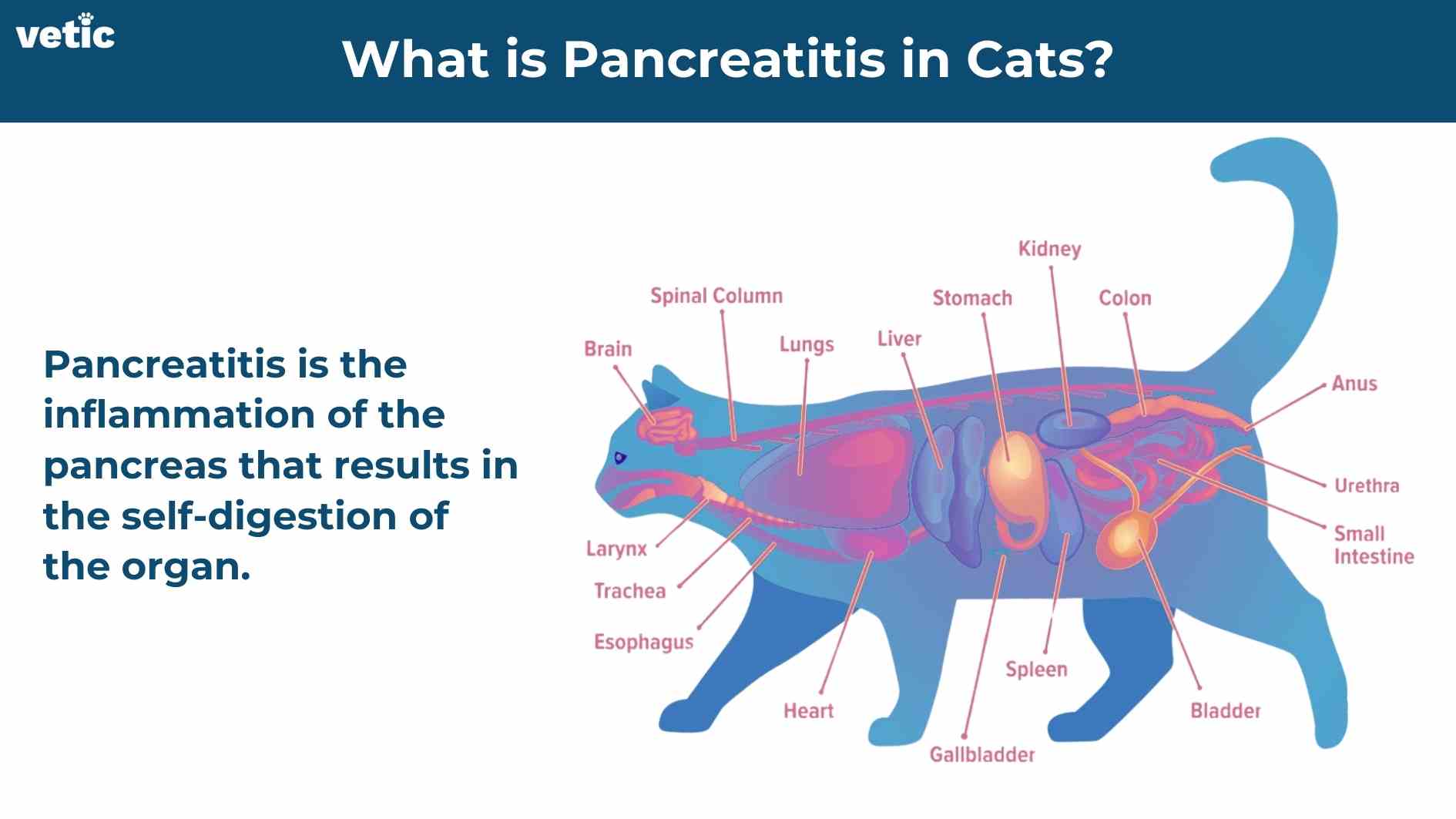
infographic titled 'what is pancreatitis in cats?' with the Vetic logo. Pancreatitis is the inflammation of the pancreas that results in the self-digestion of the organ. the image has the outline of a cat in blue and the internal organs visible and lined out that includes the lungs, stomach, liver, gall bladder, small intestine, pancreas, large intestine, kidneys and bladder. The small intestine is high intensity red, since the inflammation of the pancreas causes inflammation of the small intestine as well. The infographic is accompanied by an illustration of the basic anatomy of a cat that shows the location of every major organ and organ system including the liver, pancreas and small intestine.

Cats who recover from pancreatitis often suffer from recurrent bouts of pancreatitis. Hence, they are said to have chronic pancreatitis. 

Chronic refers to the fact that the disease has a long-term effect and it may recur after a few months or years. 

What is the Cause of Pancreatitis?

In the cases of pancreatitis in cats, the pancreatic enzymes become activated in the pancreas itself instead of reaching the small intestine in its inactive state. As a result, the enzymes begin to digest the pancreatic tissues. 

Pancreatitis in cats can be spontaneous. It may not follow an infection or change in diet. However, pancreatitis can be secondary to diabetes mellitus or inflammatory bowel disease.

What Happens During Pancreatitis in Cats?

The digestion of the pancreas primarily leads to a reduction in the levels of the pancreatic enzymes. It can cause digestive problems including vomiting and diarrhoea. 

After a few days, the self-digestion of the pancreas releases a higher level of the pancreatic enzymes into the blood. 

The longer pancreatitis in cats goes undiagnosed and untreated, more the number of pancreatic cells are destroyed. It results in a permanent overall decrease of pancreatic function. 

Signs of Pancreatitis in Cats

Pancreatitis in cats has become very common. Historically, it was considered rare, but thanks to more observant cat parents and improved diagnostics, it has become easier to diagnose pancreatitis in its early stages and treat the same. 
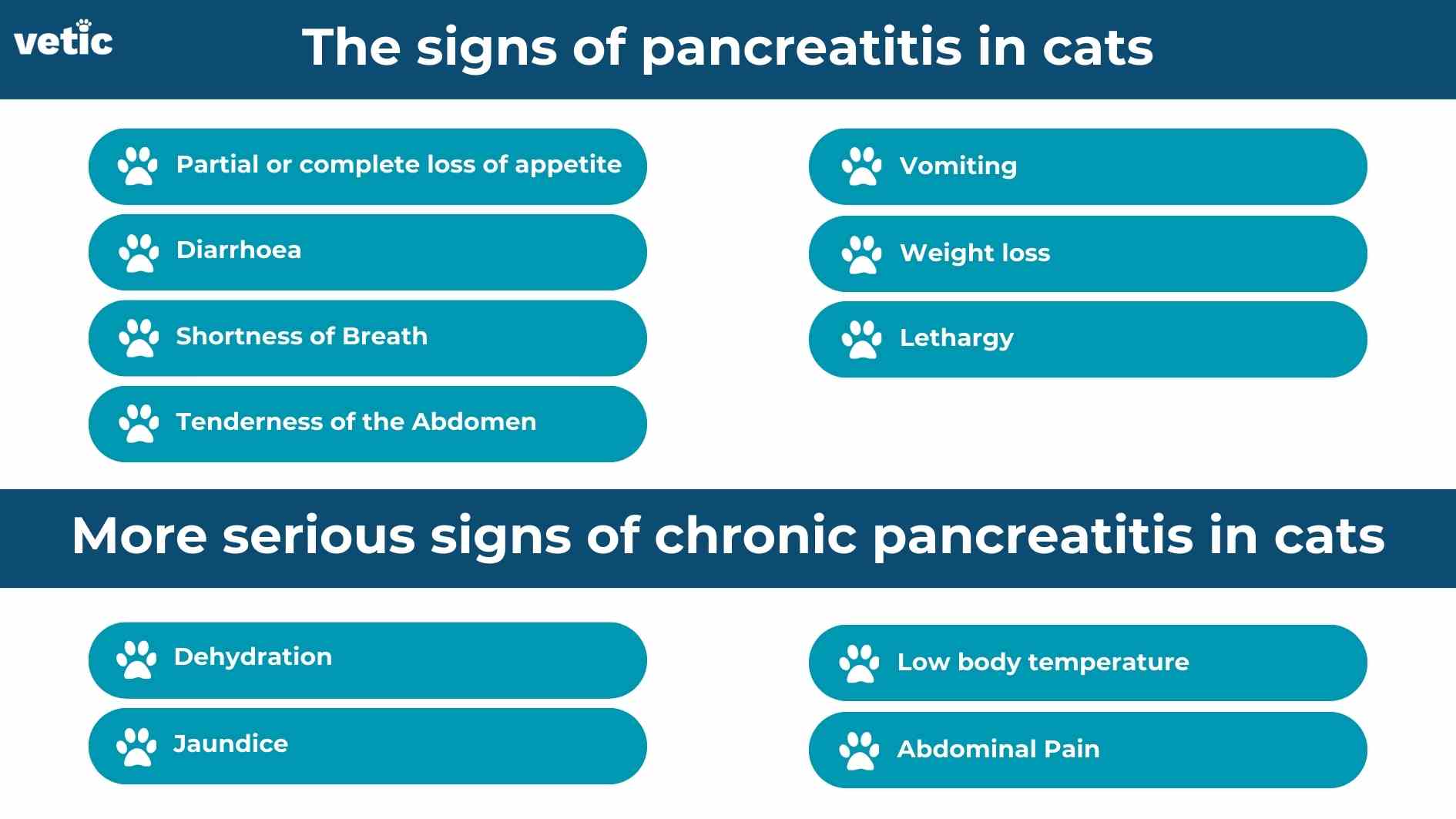
infographic on the signs of pancreatitis in cats with the vetic logo. The signs of pancreatitis in cats Partial or complete loss of appetite Vomiting Diarrhoea Weight loss Shortness of Breath Lethargy Tenderness of the Abdomen More serious signs of chronic pancreatitis in cats Dehydration Low body temperature Jaundice Abdominal Pain

The signs of pancreatitis in cats are –

  • Partial or complete loss of appetite
  • Vomiting
  • Diarrhoea
  • Weight loss
  • Shortness of Breath
  • Lethargy
  • Tenderness of the Abdomen

More serious signs that develop with chronic pancreatitis in cats are –

  • Dehydration 
  • Low body temperature
  • Jaundice 
  • Abdominal Pain

Sometimes, cats may also present with fever or hyperthermia instead of a low body temperature or hypothermia when they have pancreatitis.

Diagnosis of Pancreatitis in Cats
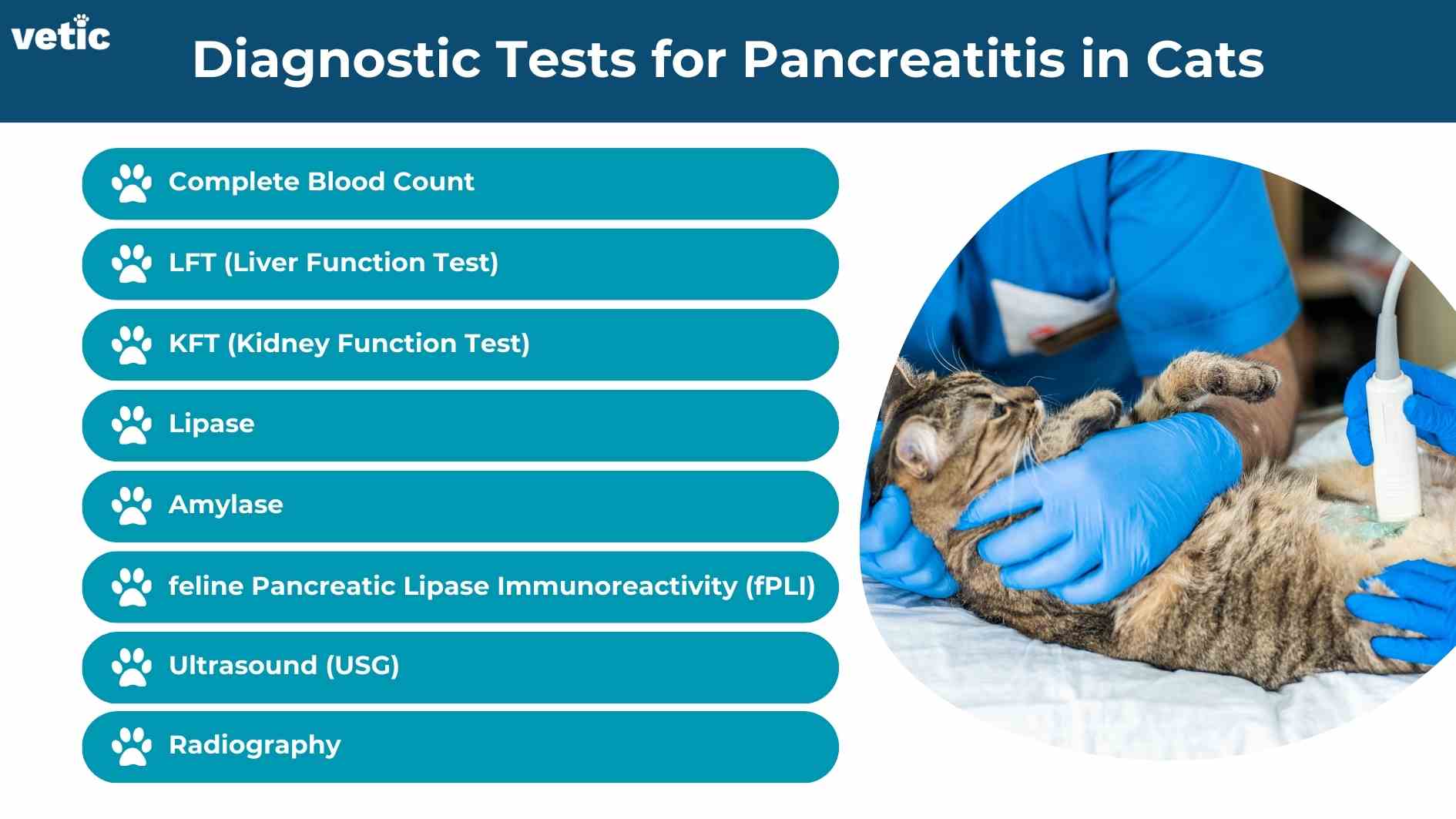
Inforgaphic titled the Diagnostic tests for pancreatitis in cats. Complete Blood Count LFT (Liver Function Test) KFT (Kidney Function Test) Lipase Amylase feline Pancreatic Lipase Immunoreactivity (fPLI) Ultrasound (USG) Radiography

The diagnosis of pancreatitis can be challenging and often impossible without a complete metabolic profile of cats. 

The veterinary doctor will recommend complete blood count (CBC), along with Liver Function Test (LFT), Kidney Function Test (KFT), Amylase and Lipase to see your cat’s overall health. 

If the serum amylase and lipase values are high, the veterinarian will recommend ultrasonography (USG) to understand the health of the pancreas. Any inflammation of the pancreas can be directly seen in the USG. 

Another, rather uncommon test (in India) is considered the most specific in determining the functional status of the pancreas – the feline Pancreatic Lipase Immunoreactivity (fPLI).

Biopsy is rarely prescribed as a diagnostic test in suspected pancreatitis in cats. 

What Is the Treatment for Pancreatitis in Cats?
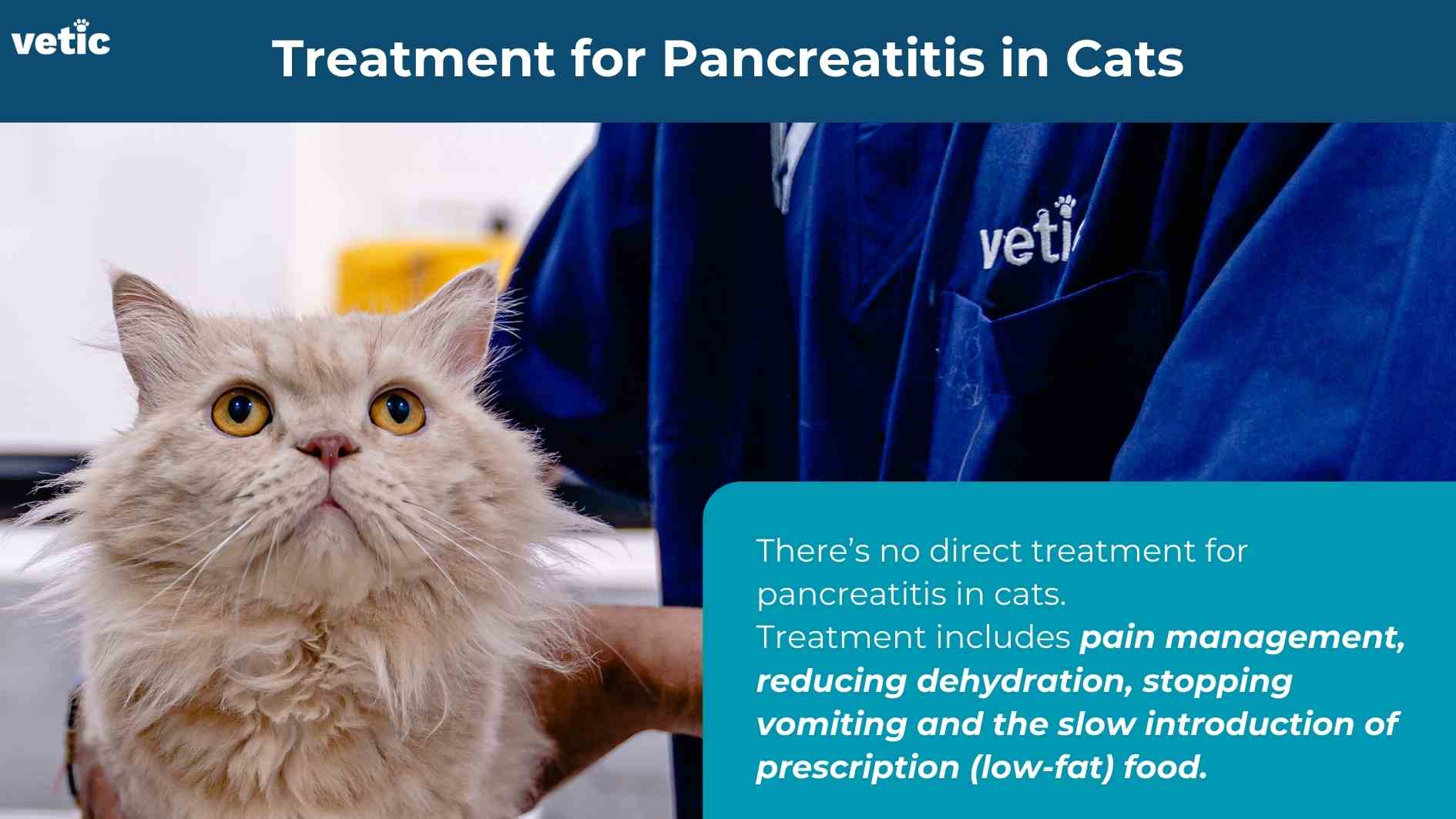
Treatment for pancreatitis in cats - a proprietary Vetic image with the veterinary nurse holding a persian cat with yellow eyes. the cat is a dull orange, has a dull coat and has weight loss. the cat is looking up at the veterinary nurse. No direct treatment for pancreatitis in cats. Treatment includes pain management, reducing dehydration, stopping vomiting and slow introduction of prescription (low-fat) food.

The treatment for pancreatitis in cats is typically long-term since there is no specific medication to treat the disease. 

Current protocols focus on the management of the signs, side effects and the nutrition of the cat while reducing the inflammation of the pancreas.

In cases of both acute and chronic pancreatitis in cats, your veterinarian may recommend long-term fluid therapy and supportive medication to get your cat’s digestive and renal system in sync. 

Smart and timely management plays the most important role in the treatment of pancreatitis in cats. So, along with anti-nausea medication, pancreatic enzymes and liver support medication, your veterinarian will recommend prescription food that’s easy on your cat’s stomach. 

Controlling the vomiting and diarrhoea plays a huge role in maintaining optimal nutrition and hydration of your cat. After your cat begins showing improvement and accepts solid food without throwing up, they may require a low-fat diet for life. 

What is the Prognosis of Pancreatitis in Cats?

The prognosis of pancreatitis in cats, in the cases of early diagnosis and treatment, and mild to moderate pancreatitis, is quite good. 

Only around 9%-40% of all severe cases of pancreatitis do not survive. 

Speak to your veterinarian for the best treatment options for your cat, if they begin showing signs of pancreatitis. 

Here are the most frequently asked questions about pancreatitis in cats:

What is pancreatitis in cats?

Pancreatitis is inflammation of the pancreas, causing digestive issues and potential damage to other organs like the liver.

What are common signs of pancreatitis in cats?

Signs include loss of appetite, vomiting, diarrhea, weight loss, lethargy, abdominal tenderness, and sometimes jaundice or fever.

How is pancreatitis diagnosed in cats?

Diagnosis involves blood tests, liver and kidney function tests, ultrasound, and sometimes feline Pancreatic Lipase Immunoreactivity (fPLI).

What causes pancreatitis in cats?

Causes include spontaneous enzyme activation in the pancreas, secondary conditions like diabetes, and inflammatory bowel disease.

Can pancreatitis in cats be cured?

There is no specific cure; treatment focuses on managing symptoms, reducing inflammation, and providing supportive care.

What is chronic pancreatitis in cats?

Chronic pancreatitis is a long-term condition with recurrent inflammation episodes, requiring ongoing management and care.

What is the prognosis for cats with pancreatitis?

Early diagnosis and treatment improve prognosis, but severe cases have a higher risk of complications and mortality.

How can pancreatitis be prevented in cats?

There is no sure way to prevent it, but maintaining good health and managing underlying conditions may help reduce risk.

Want to know more about pets?

Popular Searches

Consultation for Dog Near Me | About Us | Grooming for Dog Near Me | Vaccination for Dog Near Me | Surgery for Dog Near Me | Emergency Care for Dog Near Me | Consultation for Cat Near Me | Grooming for Cat Near Me | Vaccination for Cat Near Me | Surgery for Cat Near Me | Emergency Care for Cat Near Me | Pet Clinic in Gurgaon | Pet Clinic in Delhi | Pet Clinic in Hyderabad | Pet Clinic in Mumbai | Pet Clinic in Chennai | Pet Clinic in Noida | Pet Clinic in Ghaziabad | Pet Clinic in Bangalore | Pet Clinic in Pune | Pet Clinic in Faridabad | Pet Clinic in Kolkata | Pet Consultation in Gurgaon | Pet Consultation in Bangalore | Pet Consultation in Chennai | Pet Consultation in Delhi | Pet Consultation in Hyderabad | Pet Consultation in Mumbai | Pet Consultation in Ghaziabad | Pet Consultation in Pune | Pet Consultation in Faridabad | Pet Consultation in Noida | Pet Consultation in Kolkata | Pet Grooming in Bangalore | Pet Diagnostics in Bangalore | Pet Surgery in Delhi | Pet Emergency Care in Mumbai | Pet Clinic in Golf Course Road, Gurgaon | Pet Clinic in Sector 45, Gurgaon | Pet Clinic in Sohna Road, Gurgaon | Pet Clinic in Galleria Market, Gurgaon | Pet Clinic in Sector 57, Gurgaon | Pet Clinic in Sector 82, Gurgaon | Pet Clinic in Greater Kailash, Delhi | Pet Clinic in Pitampura, Delhi | Pet Clinic in Sector 11, Delhi | Pet Clinic in Defence Colony, Delhi | Pet Clinic in Malviya Nagar, Delhi | Pet Clinic in Anand Vihar, Delhi | Pet Clinic in Vasant Kunj, Delhi | Pet Clinic in Hitec City, Hyderabad | Pet Clinic in Secunderabad, Hyderabad | Pet Clinic in Manikonda, Hyderabad | Pet Clinic in Banjara Hills, Hyderabad | Pet Clinic in Kukatpally, Hyderabad | Pet Clinic in Kandivali, Mumbai | Pet Clinic in Thane West, Mumbai | Pet Clinic in Andheri West, Mumbai | Pet Clinic in Chembur, Mumbai | Pet Clinic in Sanpada, Mumbai | Pet Clinic in Mira Road, Mumbai | Pet Clinic in Borivali, Mumbai | Pet Clinic in Powai, Mumbai | Pet Clinic in Banerghatta, Bangalore | Pet Clinic in HSR Layout, Bangalore | Pet Clinic in Domlur, Bangalore | Pet Clinic in Kalyan Nagar, Bangalore | Pet Clinic in Whitefield, Bangalore | Pet Clinic in Sadashiva Nagar, Bangalore | Pet Clinic in Nagarbhavi, Bangalore | Pet Clinic in Electronic City, Bangalore | Pet Clinic in Banashankari, Bangalore | Pet Clinic in Yelahanka, Bangalore | Pet Clinic in Sarjapur Road, Bangalore | Pet Clinic in Koramangala, Bangalore | Pet Clinic in Aundh, Pune | Pet Clinic in Kalyani Nagar, Pune | Pet Clinic in NIBM, Pune | Pet Clinic in Wakad, Pune | Pet Clinic in Sector 20, Noida | Pet Clinic in Sector 49, Noida | Pet Clinic in Indirapuram, Ghaziabad | Pet Clinic in Sector 14, Faridabad | Pet Clinic in Salt Lake, Kolkata | Pet Clinic in Anna Nagar, Chennai | Veterinary Hospital Near Me | Pet Clinic Near Me | Vet Near Me | Pet Grooming Clinic Near Me | Pet Cancer Treatment Near Me | Pet Grooming in Chennai | Pet Grooming in Delhi | Pet Grooming in Gurgaon | Pet Grooming in Hyderabad | Pet Grooming in Mumbai | Pet Grooming in Ghaziabad | Pet Grooming in Pune | Pet Grooming in Faridabad | Pet Grooming in Noida | Pet Grooming in Kolkata | Pet Diagnostics in Chennai | Pet Diagnostics in Delhi | Pet Diagnostics in Gurgaon | Pet Diagnostics in Hyderabad | Pet Diagnostics in Mumbai | Pet Diagnostics in Ghaziabad | Pet Diagnostics in Pune | Pet Diagnostics in Faridabad | Pet Diagnostics in Noida | Pet Diagnostics in Kolkata | Pet Surgery in Bangalore | Pet Surgery in Chennai | Pet Surgery in Gurgaon | Pet Surgery in Hyderabad | Pet Surgery in Mumbai | Pet Surgery in Ghaziabad | Pet Surgery in Pune | Pet Surgery in Faridabad | Pet Surgery in Noida | Pet Surgery in Kolkata | Pet Emergency Care in Bangalore | Pet Emergency Care in Chennai | Pet Emergency Care in Gurgaon | Pet Emergency Care in Hyderabad | Pet Emergency Care in Ghaziabad | Pet Emergency Care in Pune | Pet Emergency Care in Faridabad | Pet Emergency Care in Noida | Pet Emergency Care in Kolkata
infographic titled 'what is pancreatitis in cats?' with the Vetic logo. Pancreatitis is the inflammation of the pancreas that results in the self-digestion of the organ. the image has the outline of a cat in blue and the internal organs visible and lined out that includes the lungs, stomach, liver, gall bladder, small intestine, pancreas, large intestine, kidneys and bladder. The small intestine is high intensity red, since the inflammation of the pancreas causes inflammation of the small intestine as well. The infographic is accompanied by an illustration of the basic anatomy of a cat that shows the location of every major organ and organ system including the liver, pancreas and small intestine.

    Consult A Vet

    Book An Appointment


    image
    Call A Vet
    ×

      Consult A Vet

      Book An Appointment